

Ukrainian scientists have recorded the early return of humpback whales to the Antarctic Peninsula region — the area where the Ukrainian Vernadsky Station is located.
This observation has also been confirmed by the international platform Happywhale, where scientists and whale enthusiasts from around the world upload photos of their sightings.
According to Happywhale, the first humpbacks of this season were seen on October 20 and 22 by passengers of the Silver Wind vessel in Dallmann Bay and Orne Harbour.
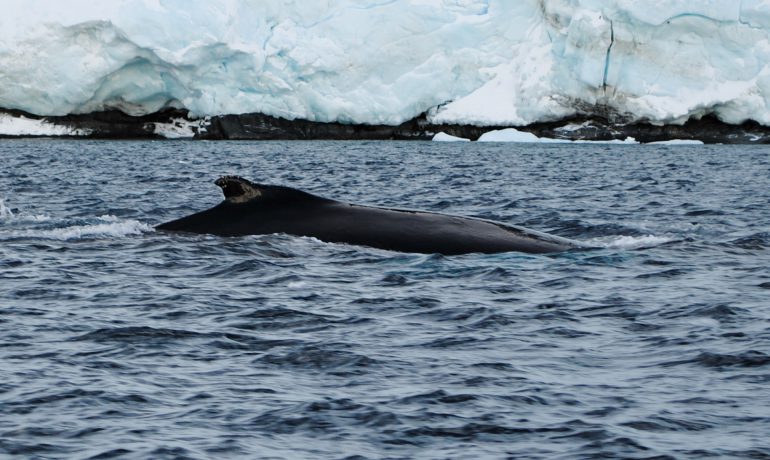
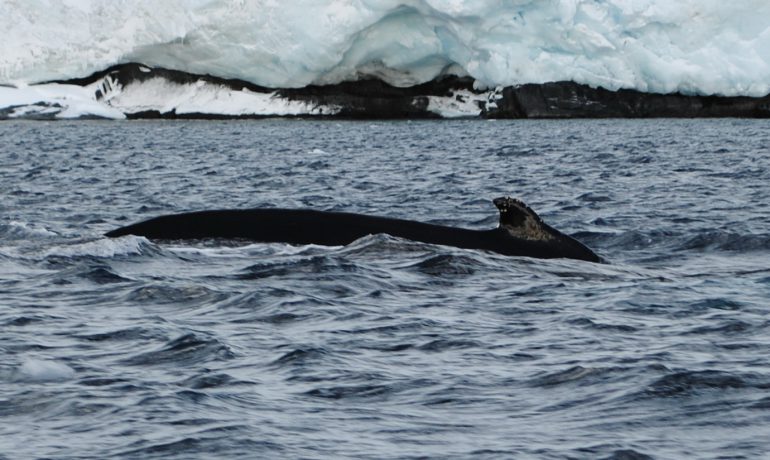
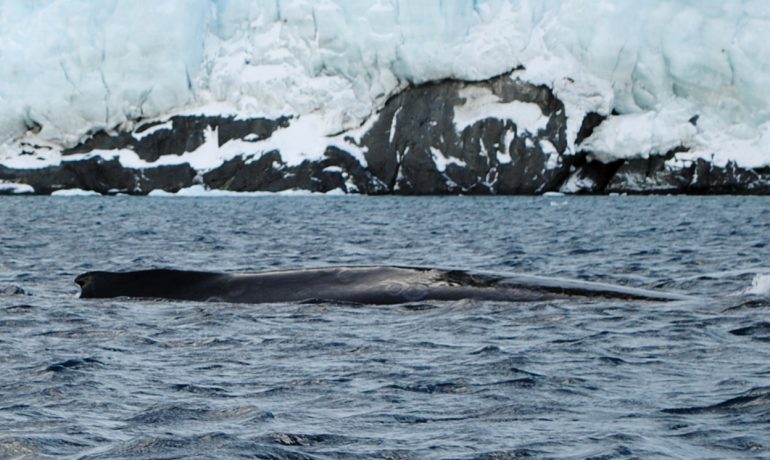
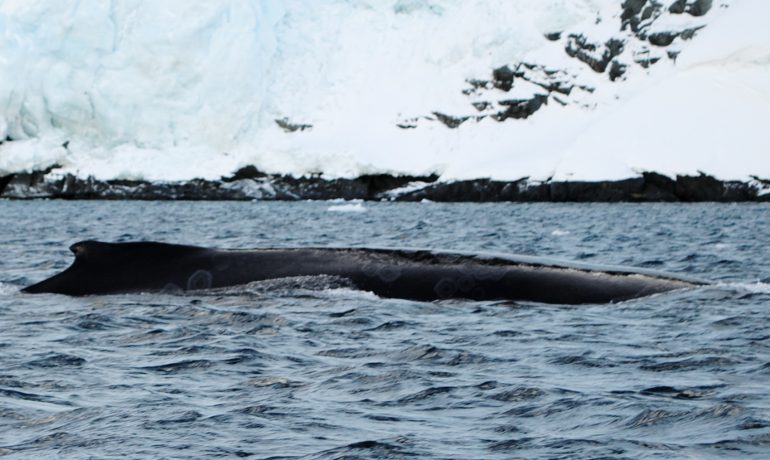
Ukrainian polar researchers spotted the whales slightly later — on October 25, further south, in the Lemaire Channel.
💬 “We approached the northern part of Hovgaard Island, where we had previously observed orcas and Antarctic minke whales. This time, we encountered a pair of orcas that led us to the entrance of the Lemaire Channel. We lost sight of them there, but later came across a pair of humpback whales,” says Zoia Shvydka, biologist of the 30th Ukrainian Antarctic Expedition.
This is currently the earliest spring record of humpback whales in the Vernadsky area — according to both Ukrainian scientists’ observations and Happywhale data (reminder: it’s springtime in Antarctica now).
Every year in spring, Southern Hemisphere humpback whales migrate from their breeding grounds near the equator back to the krill-rich waters of Antarctica. The whales observed near Vernadsky are mainly from Population G, which breeds off the western coasts of South and Central America. They will remain in Antarctic waters feeding until late autumn.
Long-term research on cetaceans conducted at Vernadsky since 2018 has shown that some whales stay even through winter. Ukrainian biologists have repeatedly observed them in June and July, and acoustic monitoring has detected their presence even in August.
💬 “Climate change, particularly the reduction of sea ice, along with krill aggregations, allows humpback whales to remain in the Antarctic Peninsula region for longer periods. Likely, these same factors have also contributed to their early return this year,” explains Oksana Savenko, biologist at the National Antarctic Scientific Center of Ukraine.
The photos taken on October 25 have already been uploaded to Happywhale. However, researchers have not yet been able to determine precisely where these whales came from, as they were new to the database. The fact that the images show only dorsal fins made the identification more complicated. Such photos are far less common in the database than tail-fluke shots, which are typically used for individual whale identification since each tail pattern is unique.
Photo by Zoia Shvydka.